CapyRun
A beginner-friendly guided training app built in 4 weeks to help procrastinating joggers reach their first 5K.
Design
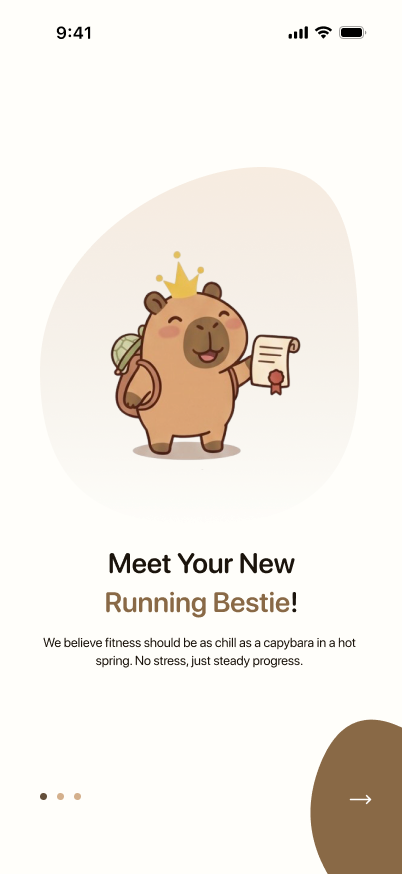
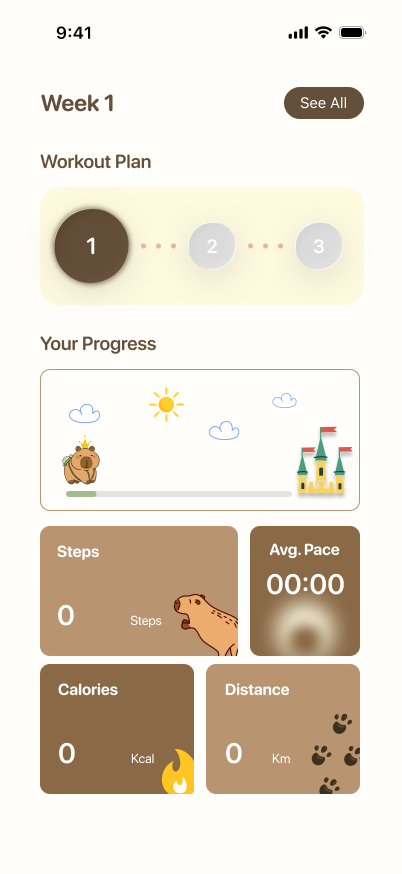
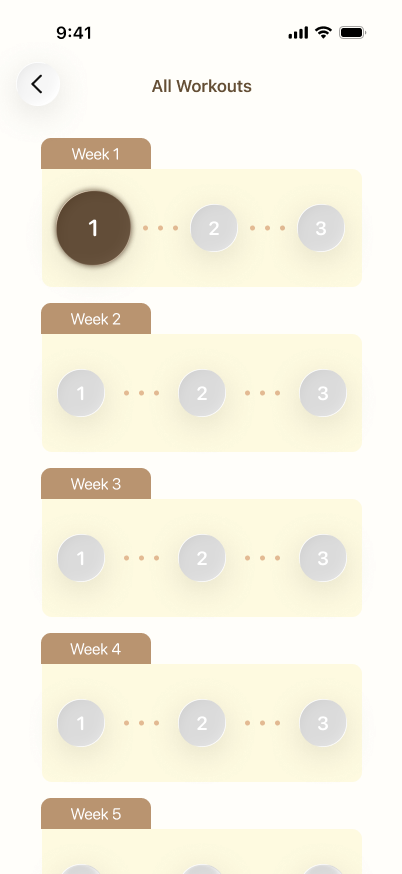
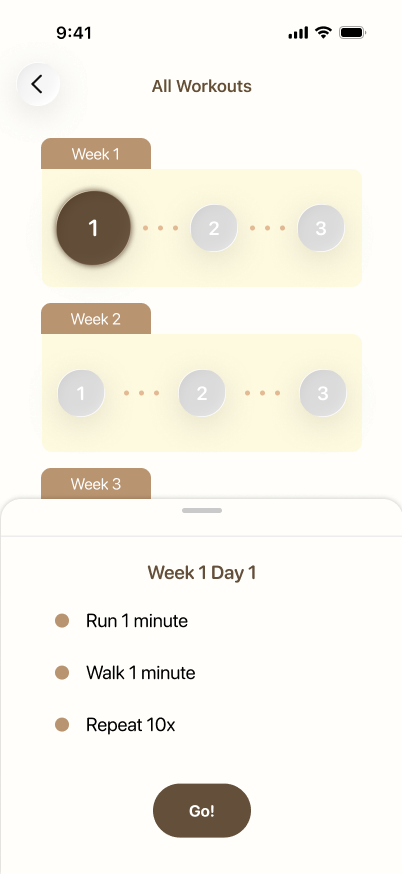
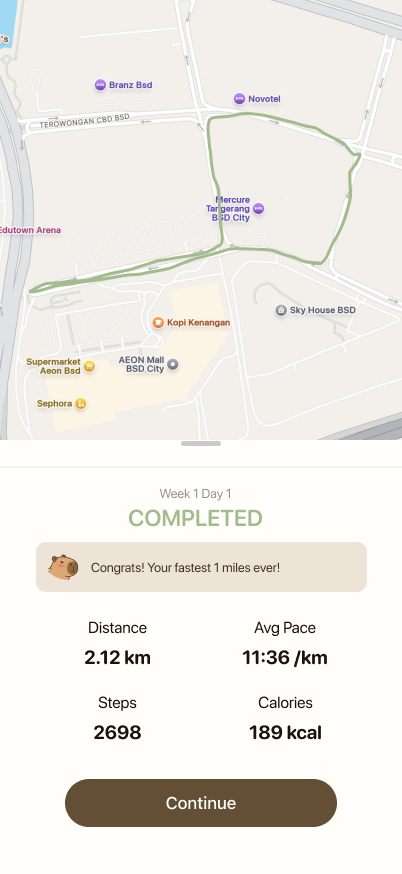
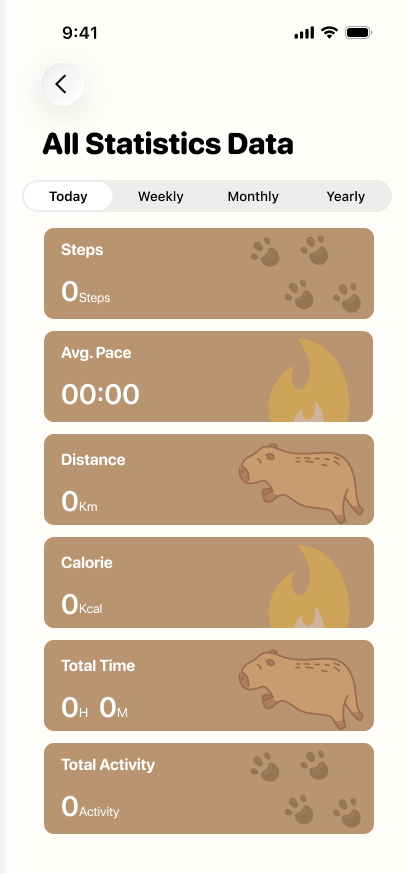
Final screens from the Figma file, covering onboarding through the first completed run.
App Flow
The flow below maps every screen a first-time user passes through, from onboarding to their first completed run, plus the two return loops (widget and weekly progress) that keep them coming back.
Screen-by-screen breakdown
1. Intro / Onboarding A multi-step, scrollable questionnaire that personalizes the training plan before the user ever sees the home screen:
- Running goal: what the user wants to achieve (e.g. finish a first 5K)
- Current activity level: how often they already exercise
- Basic biometrics: gender, height, weight (optional)
- Weekly commitment: which days the user can realistically run (3 days/week is the recommended default)
- HealthKit permission request: asks to sync health and activity data
2. Home Page The central hub. From here the user branches into three destinations: the widget storyline, their segmented training plan, and their weekly progress summary.
3. Widget Storyline A home-screen widget that visualizes training progress as an ongoing story (the capybara/castle narrative), always highlighting the current session, e.g. Week 1, Day 1 (W1D1), to nudge the user back into the app.
4. Segmented Training Plan The core plan view, broken into digestible pieces instead of one long list, with the current session (W1D1) highlighted. Two actions branch from here:
- View More → opens the Schedule Page, showing the full 6-week training schedule.
- Run → starts the Run Page, which shows the live map, pace/interval voice cues with a timer, and real-time running stats. On completion it hands off to the Finish Page, which shows the workout summary and the recorded route on the map.
5. Weekly Progress Summary A rollup shown from the Home Page covering walks, distance, and calories for the week. Tapping into it opens the Progress Page, with a chart view segmented per week so the user can see improvement over time.
Deciding the Guiding Question
We spent the first week sorting every question we had about running into two buckets, then narrowed that map down to one initial challenge.
Why do some people run while others don't? Barriers are personal (no motivation, a bad past experience) or environmental (unsafe surroundings, no community), rarely about difficulty.
What are the real limitations? Injuries are the obvious physical blocker; the mental ones are subtler: not knowing where to start, stereotypes, and misinformation about how running actually works.
What's the value, and what makes people stop? Runners gain self-knowledge and community, but a busy life, lost motivation, or injury derails that before it becomes a habit.
User Persona
As a beginner runner, I want to run once a week, so that I will be mentally confident and physically capable to run my 1st 5K
Brief User Persona
William "The Procrastinating Jogger"
"I've always wanted to build a consistent running habit, however my laziness, a lot of times, overcome my ambitions..."
Opportunity Storyboard
William is a full-time employee working a busy 9-to-5. Between early commutes and late arrivals, he's often too exhausted for physical activity and ends up doomscrolling instead. He loves running but struggles with inconsistency: he only runs on weekends, lets procrastination win, and feels discouraged by his slow progress.
He wants to fix this with a structured training plan: run at least twice a week, use the right gear, and reach his body goals through better rest and nutrition. But he can't find a program that fits his 9-5 schedule, and he has no proper tracker to keep him consistent: the tools out there are too restrictive and lack a simple, organized system for building the habit.
Solution Storyboard
What is your magic solution?
A beginner friendly guided training to reach their first 5k.
Uses:
- C25K 6-week Schedule Program
- Run & Walk Tracker
- Widgets for Progress Tracking
Allows William to:
- Track his run progress using per week schedule
- Flexibly following run schedule according his own schedule.
- Engaged to the widget's storyline
How does your solution address their pains /needs?
-
Too confused to make a sustainable and progressive training plan -> achievable progress/challenge bubbles
-
Does not know when to change pace/interval training -> audio cue to indicate change in pace
-
Lacking motivation & discipline to run -> tracks progression & show stats of user improvement over time
-
Feeling overwhelmed -> segmented view of the training plan
-
Limited time -> lighter accountability system & freedom in choosing schedules
What would a happy ending look like?
-
William feels ready for his 5K.
-
He can deny his procrastination and be consistent by doing smaller steps to reach his goal.
-
He has fit body and well-trained endurance.
-
He doesn't feel overwhelmed and intimidated by the plan and schedule given to him.
Challenges: technical, product, and execution problems the team hit
- Technical: No have much time to develop in Widget hard to synchronize the state in from main app and